Health and common issues
In general, Briard dogs are a healthy breed. However as with many breeds, they can suffer from various hereditary eye disorders, and hip dysplasia (a condition that can lead to mobility problems). Eye testing and hip scoring of dogs prior to breeding is therefore important. The breed club monitor the health of the breed carefully and should be contacted for the most up-to-date information and details of any DNA or additional testing they recommend. Breed Clubs can be found on the Kennel Club website.
Space requirements
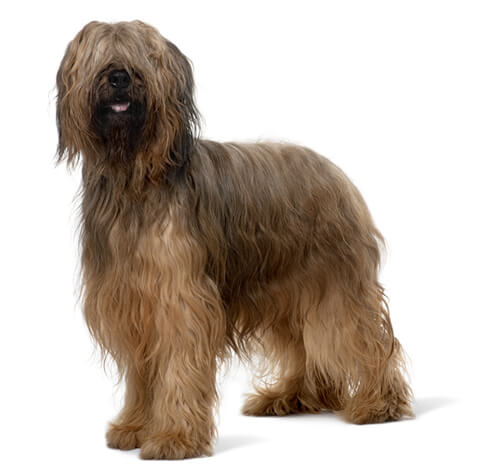
This is a large dog with a long coat, as such you’ll need space to groom and space to offer a wet dog room to dry off without covering the rest of the house in water and mud! A large secure garden is a must as is access to a wide variety of interesting walks with secure areas to let them run off lead. This is a dog better suited to the rural suburbs or a countryside home due to both their size and guarding instincts.
Training briards
With the right motivation and an understanding of the activities a Briard enjoys, this is not a difficult breed to train. Remember they are an independent thinker used to making decisions for themselves, so you need to work hard to get them to listen to you and follow your guidance. Positive reinforcement via the use of food, toys and the opportunity to perform inherently reinforcing behaviours such as herding or moving objects will work wonders. Pay particular attention to early socialisation with people outside the family, as well as other animals and livestock. As this breed has a long coat, you should get them used to grooming early as well.
Best family dog breeds
The Briard is often described as a ‘heart wrapped in fur’ in reference to how loving they are to their family. However as young dogs they are large and exuberant which may make them unsuitable for homes with young children or frail/unsteady people. Ideally suited to active families who enjoy long walks and dog training as a hobby in its own right. Older children and teenagers may enjoy training or working a Briard in a variety of competitions and sports. Their exercise and grooming requirements will take up multiple hours per day so keep this in mind. While many dogs are traditionally thought of as being good with children, all dogs and children need to be taught to get on with and respect each other, and be safe together. Even so, dogs and young children should never be left alone together and adults should supervise all interactions between them.
Did you know?
- Briards have featured in a number of films, TV series and cartoons, notably, Get Smart, Married…With Children, Dharma &; Greg, Addams Family, Dennis the Menace (1993 live action film), Looney Tunes and quite a few more.
- Traditionally the Briards ears were cropped and made to stand upright giving the dog a very different appearance, however this practice is thankfully now illegal in most of Europe including Britain and France, and hopefully the practice will die out worldwide as it is inhumane, wholly unnecessary and extremely painful for the dog.
- Owners of the breed often report on how affectionate they are. Many even say that they ‘grieve’ when separated from their humans!
- The Briard is a breed of many talents and have been used as service dogs and therapy dogs.
- They have double dew claws which helps them balance, even on the most uneven of terrains!