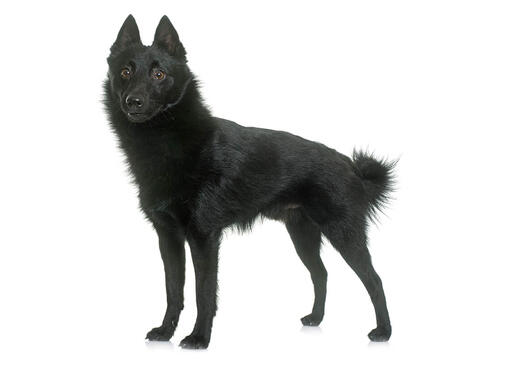
Health and common issues
The Schipperke dog is generally quite a hardy breed, but they can suffer some inherited neurological conditions, and hip disorders. For the most up to date health information visit the Kennel Club website or consult the breed club.
Space requirements
Bred to live happily in a very small space within a barge cabin, the Schipperke is not hard to house in that respect. A securely fenced garden is a must however as the Schipperke is agile, fast and has a desire to hunt out small squeaky prey. Whilst they can live pretty much anywhere, consideration must be paid to the amount these little dogs can and will bark. As their tendency is to alert to the comings and goings of the environment around them, think twice about keeping one in a busy environment with close neighbours.
Training schipperke dogs
The devil makes work for idle paws, or so the saying goes in dog circles and that is never truer than with the Schipperke. This little canine will enjoy dog training as long as the right motivation is there and so train with food and toys and keep things fun and interesting. Socialise and habituate well to other animals, children and day to day activity from an early age. Attention must be paid to recall and training a ‘quiet’ cue as the Schipperke loves the sound of their own voice and delights in sharing it with the neighbourhood!
Best family dog breeds
A fun family dog in the right home, you will need time to dedicate to training and keeping the Schipperke’s mind occupied, which may mean they are better homed with older children or teenagers. While many dogs are traditionally thought of as being good with children, all dogs and children need to be taught to get on with each other and be safe together. Even so, dogs and young children should never be left alone together and adults should supervise all interactions between them.
Did you know?
The breed was made popular as a companion and pet by Queen Marie-Henriette (wife of King Leopold II and first cousin to the then future Queen Mary of England). In 1885 she bought a Schipperke she’d seen at a show in Brussels, named him ‘Black’ after his colouring and was often seen walking and driving with him. They became so desirable as a result that some unscrupulous sellers would try to pass off any suitably sized black dog as a Schipperke.