Health and common concerns
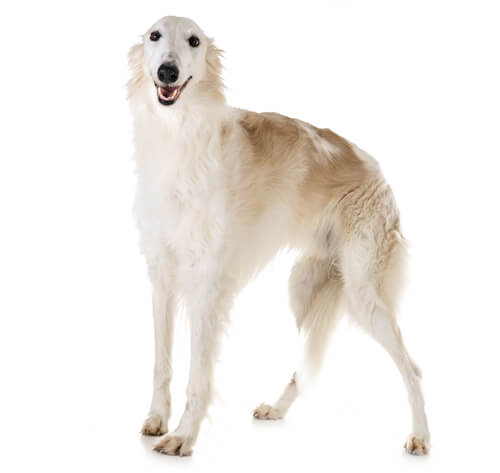
The Borzoi breed is generally a healthy, robust one. As with many breeds, some hereditary eye conditions can occur, and breeding dogs should be eye-tested. Hypothyroidism (an underactive thyroid gland) can be an inherited condition in this breed.
Space requirements
Borzoi is a large breed dog, and whilst they can curl up small when they want to, they do require space to stretch out, a garden suitable for running in and to live within easy reach of secure running space. Due to the time it takes these dogs to mature, Borzois are not suited to going up and down stairs frequently.
Training borzoi dogs
Training the Borzoi requires patience and understanding what motivates them to want to work with you. They will always find running and chasing rewarding, so use this to your advantage where possible, and make training recall a priority, even though it is not advisable to let a Borzoi off lead in an unsecured area. This is not a dog who is likely to enjoy dog training for the sake of training itself. Careful management is needed, as well as training ‘as you go along’ rather than specific training sessions.
Best family dog breeds
The well-trained adult Borzoi can be an excellent family dog, however the immature puppy and adolescent Borzoi may be too exuberant and bouncy for very small children or frail older people. Like all larger breeds, they take some time to grow and mature and need careful management during this time. While many dogs are traditionally thought of as being good with children, all dogs and children need to be taught to get on with each other and be safe together. Even so, dogs and young children should never be left alone together and adults should supervise all interactions between them.
Did you know?
- Captain E J Smith of the RMS Titanic, had a Borzoi called Ben who was famously photographed with him on desk before the ill-feted ship set sail. Thankfully for Ben, he didn’t stay for the voyage.
- For the film Pink Floyd: Live at Pompeii, a Borzoi called Nobs provided lead vocals alongside Dave Gilmour on harmonica and Roger Waters on guitar. The song was ‘Seamus’ named after Dave Gilmour’s dog who originally howled in the studio recording but was re-titled ‘Mademoiselle Nobs’ in the film.